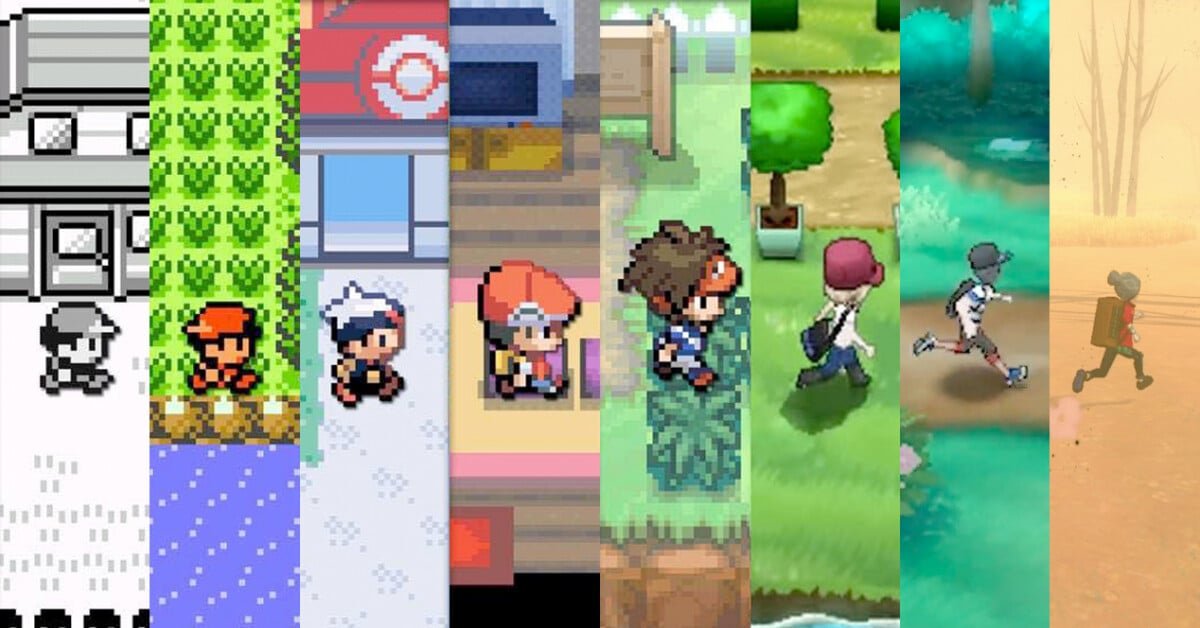
Ever felt a little lost trying to keep track of the Pokémon universe? With hundreds of creatures, numerous regions, and evolving gameplay, it’s easy to wonder how it all fits together. Thankfully, the entire saga is brilliantly organized into "generations" – a fundamental concept that helps fans, old and new, make sense of the vast, ever-expanding world of Pokémon. Truly grasping Pokémon generations and counting methods isn't just trivia; it's your compass for navigating its rich history and future.
At a Glance: Your Generation Cheat Sheet
- What is a Generation? A new generation begins with the release of the first core series paired games featuring new Pokémon and mechanics, typically every 3-4 years.
- Key Markers: Each generation introduces a new set of Pokémon, a new region, and often significant gameplay innovations.
- Counting 'Mons: New Pokémon are assigned a National Pokédex number sequentially as they are introduced, building on the previous generation's total.
- Remakes Count Differently: Remakes (like FireRed/LeafGreen or Brilliant Diamond/Shining Pearl) are part of the generation in which they are released, not their original generation.
- Impact: Generations influence all Pokémon media, from main games to spin-offs, anime, manga, and the Trading Card Game.
- Current Standing: As of the latest updates, we're in Generation 9, with over 1000 unique Pokémon species.
The Core Concept: What Defines a Pokémon Generation?
Imagine the Pokémon universe as a grand story told in chapters. Each chapter is a "generation," a distinct era marked by a groundbreaking release. A new generation isn't just about adding new creatures; it's a complete refresh. It kicks off with the release of a new pair of core series games (think Pokémon Red and Blue, or Scarlet and Violet), introducing a brand-new region to explore, a fresh roster of Pokémon species, and often significant gameplay innovations that redefine how trainers battle, explore, and connect.
These generational shifts are crucial. They dictate the available Pokémon, the story's setting, and even fundamental game mechanics like Abilities or Mega Evolutions. While the exact duration can vary, each generation typically spans 3-4 years, giving players ample time to dive deep into its offerings before the next major leap. It's a structured way the Pokémon Company keeps the franchise fresh, exciting, and consistently evolving.
Why Understanding Generations Matters (Beyond Just Collecting 'Em All)
Knowing about Pokémon generations does more than just help you organize your Pokédex. It's a lens through which you can appreciate the franchise's growth, understand its design philosophies, and even predict future trends.
For starters, competitive players need to know which Pokémon, moves, and abilities are available in a given format, which is often tied to the current or past few generations. For fans of the anime, each new generation brings a new saga for Ash Ketchum (or now, Liko and Roy), exploring a new region with a new team. The Trading Card Game, too, closely mirrors the video game generations, introducing new sets and mechanics inspired by the latest games. This interconnectedness means that understanding generations is key to engaging with virtually any part of the Pokémon ecosystem, from the core games to the animated series, and beyond.
A Journey Through Time: Unpacking Each Pokémon Generation
The Pokémon world has come a long way since its 1996 debut. Let's walk through each generation, charting their evolution, new additions, and lasting impacts.
Generation 1 (1996 - Game Boy: Kanto's Genesis)
It all began in Japan in 1996 with Pokémon Red and Pokémon Green on the venerable Game Boy, followed by Pokémon Blue with improved visuals. American audiences caught their first glimpse with Pokémon Red and Pokémon Blue in September 1998, a launch so successful it sparked a global phenomenon. The anime, surprisingly, hit American airwaves slightly before the games, hooking a generation of fans.
- Region: Kanto
- New Pokémon: 151 (Bulbasaur, Charmander, Squirtle, Pikachu, Mew, etc.)
- Total Pokémon (at end of Gen): 151
- Key Innovations: The very foundation of Pokémon – catching, battling, trading, and completing the Pokédex. It introduced the original 151 creatures that captured hearts worldwide.
- Notable Spin-offs/Games: Pokémon Yellow (a Pikachu-centric version aligning with the anime), Pokémon Stadium (N64), Pokémon Trading Card Game (game), and Pokémon Snap.
Generation 2 (1999 - Game Boy Color: Expanding the World)
Just three years later, in late 1999, Japan welcomed Pokémon Gold and Pokémon Silver, arriving in the US in October 2000. These titles weren't just sequels; they were ambitious expansions, fully utilizing the Game Boy Color's capabilities.
- Region: Johto (with the original Kanto region accessible post-game!)
- New Pokémon: 100 (bringing the total to 251, including evolutions for Gen 1 Pokémon like Umbreon and Espeon)
- Total Pokémon (at end of Gen): 251
- Key Innovations: Introduction of two new types (Dark and Steel), Pokémon breeding, the day/night cycle, held items, and shiny Pokémon. Being able to revisit Kanto was a monumental feature.
Generation 3 (2002 - Game Boy Advance: A Fresh Start)
The move to the Game Boy Advance in late 2002 (Japan) and early 2003 (US) brought Pokémon Ruby and Pokémon Sapphire. This generation often felt like a soft reboot, focusing on a completely new region and a fresh roster, with many Gen 1 and 2 Pokémon unavailable until later games.
- Region: Hoenn
- New Pokémon: 135 (total 386, including Mudkip and Gardevoir)
- Total Pokémon (at end of Gen): 386
- Key Innovations: Pokémon Abilities, Natures, an overhauled EV/IV system for competitive play, Double Battles, and Pokémon Contests.
- Enhanced Remakes: This generation popularized the concept of "enhanced remakes" and additional games. Pokémon FireRed and Pokémon LeafGreen (2004) remade the Gen 1 games, bringing them to the GBA and adding wireless trading. Pokémon Emerald (2004/2005) combined elements of Ruby and Sapphire and introduced the challenging Battle Frontier.
Generation 4 (2006 - Nintendo DS: Stepping into 3D)
The Nintendo DS era began in late 2006 with Pokémon Diamond and Pokémon Pearl. This generation brought Pokémon into a 3D-rendered world on a handheld console, leveraging the DS's dual screens for innovative gameplay.
- Region: Sinnoh
- New Pokémon: 107 (total 493, including Arceus and Lucario)
- Total Pokémon (at end of Gen): 493
- Key Innovations: The Physical/Special split for moves (a massive competitive change), online play via Nintendo Wi-Fi Connection, and the introduction of many new evolutions for previous generation Pokémon.
- Enhanced Remakes: Pokémon Platinum (2008/2009) refined Diamond and Pearl with an expanded storyline and improved online features. Pokémon HeartGold and Pokémon SoulSilver (2009/2010) are widely celebrated remakes of Gold and Silver, allowing your lead Pokémon to follow you around.
Generation 5 (2010 - Nintendo DS: A Narrative Masterpiece)
Pokémon Black and Pokémon White launched in Japan in 2010, pushing the DS's graphical limits. This generation was unique for its complex storyline, deeper characters, and a Pokedex composed entirely of new Pokémon until the post-game.
- Region: Unova
- New Pokémon: 156 (the most new Pokémon in any single generation, bringing the total to 649, including Snivy, Tepig, Oshawott)
- Total Pokémon (at end of Gen): 649
- Key Innovations: Triple Battles and Rotation Battles, a dynamic seasons system, and the Dream World online feature.
- Direct Sequels: A first for the series, Pokémon Black 2 and Pokémon White 2 (2012/2011) were direct sequels, continuing the story two years later with new areas and Pokémon.
Generation 6 (2013 - Nintendo 3DS: The Leap to 3D Graphics)
In a historic move, Pokémon X and Pokémon Y saw a simultaneous worldwide release in 2013 on the Nintendo 3DS. This generation marked the franchise's full transition to 3D models for all Pokémon and environments during battles and exploration.
- Region: Kalos
- New Pokémon: 72 (the fewest new Pokémon in a single generation, total 721, notably Greninja)
- Total Pokémon (at end of Gen): 721
- Key Innovations: Mega Evolution (a temporary battle transformation), the introduction of the Fairy-type (to balance Dragon-types), and trainer customization.
- Remakes: Pokémon Omega Ruby and Pokémon Alpha Sapphire (2014) beautifully reimagined the Gen 3 games with new story elements and Mega Evolutions.
Generation 7 (2016 - Nintendo 3DS / Nintendo Switch: Island Adventures and New Forms)
The tropical Alola region debuted with Pokémon Sun and Pokémon Moon on the Nintendo 3DS in 2016. This generation experimented with the traditional formula, replacing Gyms with Island Trials and focusing heavily on regional variants.
- Region: Alola
- New Pokémon: 88 (total 809, including Incineroar and Mimikyu)
- Total Pokémon (at end of Gen): 809
- Key Innovations: Z-Moves (powerful, one-time-per-battle attacks), Regional Forms (Pokémon from previous generations with new looks and types), and Ultra Beasts.
- Direct Sequels & New Gameplay: Pokémon Ultra Sun and Pokémon Ultra Moon (2017) offered an alternative story with additional Pokémon and features. This generation also saw Pokémon: Let's Go, Pikachu! and Pokémon: Let's Go, Eevee! (2018) on the Nintendo Switch, which were Gen 1 remakes with Pokémon GO-inspired catching mechanics and introduced the new Mythical Pokémon Meltan and Melmetal.
Generation 8 (2019 - Nintendo Switch: Giants in the Stadium)
The first core series games designed specifically for the Nintendo Switch, Pokémon Sword and Pokémon Shield, launched in 2019. Set in a region inspired by the UK, this generation emphasized stadium battles and dynamic transformations.
- Region: Galar
- New Pokémon: 96 (total 905, including Wooloo and Polteageist)
- Total Pokémon (at end of Gen): 905
- Key Innovations: Dynamax and Gigantamax (temporary colossal forms of Pokémon, some with unique appearances), Max Raid Battles, and the Wild Area (a semi-open-world zone).
- Remakes & Expansions: Pokémon Brilliant Diamond and Pokémon Shining Pearl (2021) were faithful remakes of the Gen 4 games. A major highlight was Pokémon Legends: Arceus (2022), set in ancient Hisui (Sinnoh), offering an open-world action RPG experience and introducing 7 new Pokémon plus 17 Hisuian Forms. Sword and Shield also received two DLC expansions, The Isle of Armor and The Crown Tundra, which added new and returning Pokémon.
Generation 9 (2022 - Nintendo Switch: True Open World)
The current generation kicked off in 2022 with Pokémon Scarlet and Pokémon Violet, pushing the series further into open-world territory with a non-linear storyline.
- Region: Paldea
- New Pokémon: 120 (with DLC, bringing the franchise total to 1025)
- Total Pokémon (at end of Gen): Currently 1025
- Key Innovations: Terastal Phenomenon (allowing any Pokémon to temporarily change its type and boost moves), Paradox Pokémon (ancient/future forms), and a truly open-world, non-linear adventure. The DLC, The Hidden Treasure of Area Zero, expanded the Paldea region and added new Pokémon and story elements.
You can dive deeper into the exact number of creatures introduced with each new chapter of the saga right here: How many Pokémon per generation.
Understanding Pokémon Counting Methods: New, Total, and the Nuances
When we talk about "counting methods" in Pokémon generations, it primarily refers to two things: the number of new Pokémon introduced in a specific generation and the running total number of unique Pokémon species in the entire franchise.
Each generation adds a distinct block of new Pokémon, assigned sequential National Pokédex numbers. For example, Generation 1 introduced Pokémon #1 (Bulbasaur) to #151 (Mew). Generation 2 picked up from #152 (Chikorita) to #251 (Celebi), and so on. This sequential numbering is the backbone of the "total" count.
However, the counting isn't always a straightforward addition:
- New Evolutions for Old Pokémon: When a new generation introduces an evolution for a Pokémon from a previous generation (e.g., Electivire in Gen 4, evolving from Gen 1's Electabuzz), that new evolution is counted as one of the new Pokémon for the current generation.
- Regional Forms (Alolan, Galarian, Hisuian, Paldean): These are fascinating variants. While they share a name with an existing Pokémon, their distinct typing, abilities, and often stat changes mean they are effectively treated as new forms. They often receive a new Pokédex entry within their regional Pokédex and contribute to the generational count of "new variants," even if they don't always get a brand-new National Pokédex number (unless they evolve into a completely new species, like Galarian Meowth evolving into Perrserker, which is a new Pokémon).
- Mythical/Legendary Pokémon: These powerful, often event-exclusive Pokémon are always counted within the generation they are introduced, regardless of how they are distributed. Meltan and Melmetal, introduced in Gen 7 via Pokémon: Let's Go, Pikachu!/Eevee!, are perfect examples of new Pokémon belonging to Gen 7 even if they appear in a game featuring older Pokémon.
- DLC Expansions: Starting with Generation 8, DLC content has added new Pokémon (both entirely new species and returning ones). These new species are retroactively counted as part of the generation's total. For example, The Isle of Armor and The Crown Tundra for Sword and Shield added Pokémon like Kubfu and Glastrier, increasing Gen 8's unique species count. Similarly, Scarlet and Violet's DLC added to Gen 9's roster.
So, while we talk about 151 Pokémon in Gen 1, and 100 in Gen 2, the "total" number constantly climbs, reflecting every single unique species Game Freak has ever designed, regardless of its origin story or evolutionary path.
Navigating the Nuances: Remakes, Enhanced Versions, and Spin-offs
The Pokémon universe isn't just about the main paired games; it's a rich tapestry woven with remakes, enhanced versions, and unique spin-offs. Understanding how these fit into the generational structure is key.
Remakes: A Blast from the Past, a Product of the Present
Perhaps the most common misconception revolves around remakes. While Pokémon FireRed and LeafGreen revisited the Kanto region and its original 151 Pokémon, they were released in 2004 – firmly within Generation 3. This means they benefited from Gen 3's mechanics, graphics, and connectivity. Similarly, Pokémon HeartGold and SoulSilver (Gen 4 remakes of Gen 2) and Pokémon Omega Ruby and Alpha Sapphire (Gen 6 remakes of Gen 3) are considered part of the generation in which they were released, not the generation of the games they emulate. This distinction is crucial for understanding mechanical compatibility, trade features, and the overall game design philosophy.
Enhanced Versions and Direct Sequels: Expanding the Narrative
Some generations introduce a third, enhanced version of the original paired games. Think Pokémon Yellow (Gen 1), Crystal (Gen 2), Emerald (Gen 3), or Platinum (Gen 4). These games typically build upon the original storyline, add new features, expand areas, and often include more legendary Pokémon. They are undeniably part of their respective generations, offering a definitive version of that era's experience.
Generation 5 uniquely introduced direct sequels: Pokémon Black 2 and White 2. These weren't just enhanced versions; they continued the narrative of Black and White two years later, featuring new areas, characters, and Pokémon not present in the original Unova games. This demonstrated an innovative approach to extending a generation's lifespan and story.
Spin-offs and Unique Core-Series Experiences
Then there are titles like Pokémon: Let's Go, Pikachu! and Let's Go, Eevee! (Gen 7) and Pokémon Legends: Arceus (Gen 8). While Let's Go remade Gen 1's Kanto, its unique mechanics (like Pokémon GO-style catching) and the introduction of Meltan and Melmetal firmly place it within Generation 7. Pokémon Legends: Arceus was a significant departure, offering an open-world experience in ancient Hisui. Despite its unique gameplay, the new Pokémon and Hisuian forms it introduced count towards Generation 8's roster, showcasing how a generation can encompass diverse gameplay styles while still adhering to its core set of Pokémon introductions.
Your Generation Guide: Enhancing Your Pokémon Journey
So, why bother with all this generational minutiae? Because it profoundly enriches your entire Pokémon experience.
Knowing which generation a game belongs to immediately gives you a baseline expectation for its graphics, gameplay mechanics, and available Pokémon. Playing through games chronologically by generation offers a fascinating historical perspective on how the franchise has evolved its storytelling, combat systems, and world design. You'll witness the shift from 2D sprites to full 3D, the introduction of abilities, Mega Evolution, Z-Moves, and open-world exploration.
For competitive players, understanding the generational cut-offs is essential for team building and strategy, as different generations introduce different metagames. For collectors, it helps organize your goals – aiming to "complete" a generation's Pokédex or focus on Pokémon introduced in a specific era. Ultimately, this knowledge transforms Pokémon from a collection of individual games into a grand, interconnected saga, making every new release or revisit to an older title all the more meaningful.
Frequently Asked Questions About Generations
We've covered a lot, but some questions pop up often when discussing Pokémon generations. Let's tackle them head-on.
Are Regional Forms (e.g., Alolan Vulpix, Galarian Weezing) considered new Pokémon for a generation?
Yes, absolutely! While they share a name with an existing Pokémon, regional forms possess unique typing, abilities, and often significantly different appearances. They are treated as distinct variants within their respective generations and contribute to that generation's total number of unique Pokémon forms, even if they don't always get a new National Pokédex number. If a regional form has a unique evolution (like Galarian Meowth evolving into Perrserker), that evolution is counted as a brand-new Pokémon.
Do Pokémon introduced via DLC or updates count towards a generation's total?
Yes, they do. Starting prominently with Generation 8's Sword and Shield DLCs (The Isle of Armor and The Crown Tundra), and continuing with Generation 9's Scarlet and Violet DLC (The Hidden Treasure of Area Zero), any truly new Pokémon species introduced are added to that generation's official count. This includes brand-new Legendary or Mythical Pokémon, as well as new forms or evolutions of existing Pokémon.
Why do some generations have significantly more new Pokémon than others?
The number of new Pokémon introduced in each generation varies based on Game Freak's design philosophy for that era. Generation 5 (Black and White) had the most (156) because it aimed for a "soft reboot," featuring only new Pokémon until the post-game, ensuring a fresh experience. Generation 6 (X and Y) had the fewest (72) likely due to the massive undertaking of transitioning the entire game to 3D models for all Pokémon and implementing the new Mega Evolution mechanic. It reflects development priorities and design choices rather than a strict quota.
How long does a Pokémon generation typically last?
While there's no fixed rule, a Pokémon generation typically lasts around 3-4 years. This period usually includes the initial paired games, an enhanced version or direct sequels, and often remakes of older generations on the same console. The cycle allows players to fully immerse themselves in a generation's offerings before the next major launch on new hardware or with significant innovations.
Mastering the Multiverse: Your Next Adventure Awaits
Understanding Pokémon generations isn't just about categorizing monsters; it's about appreciating the incredible evolution of a cultural phenomenon. From the pixelated sprites of Kanto to the sprawling open worlds of Paldea, each generation has built upon its predecessors, refining gameplay, expanding lore, and introducing new ways to connect with these beloved creatures.
Now armed with this knowledge, you have a clearer roadmap for exploring the Pokémon universe. Whether you're planning a nostalgic playthrough of an older title, diving into the latest release, or engaging in competitive battles, this generational framework empowers you to navigate the Pokémon world with newfound clarity and appreciation. So go forth, trainer, and embark on your next grand adventure – the Pokémon multiverse is yours to master!