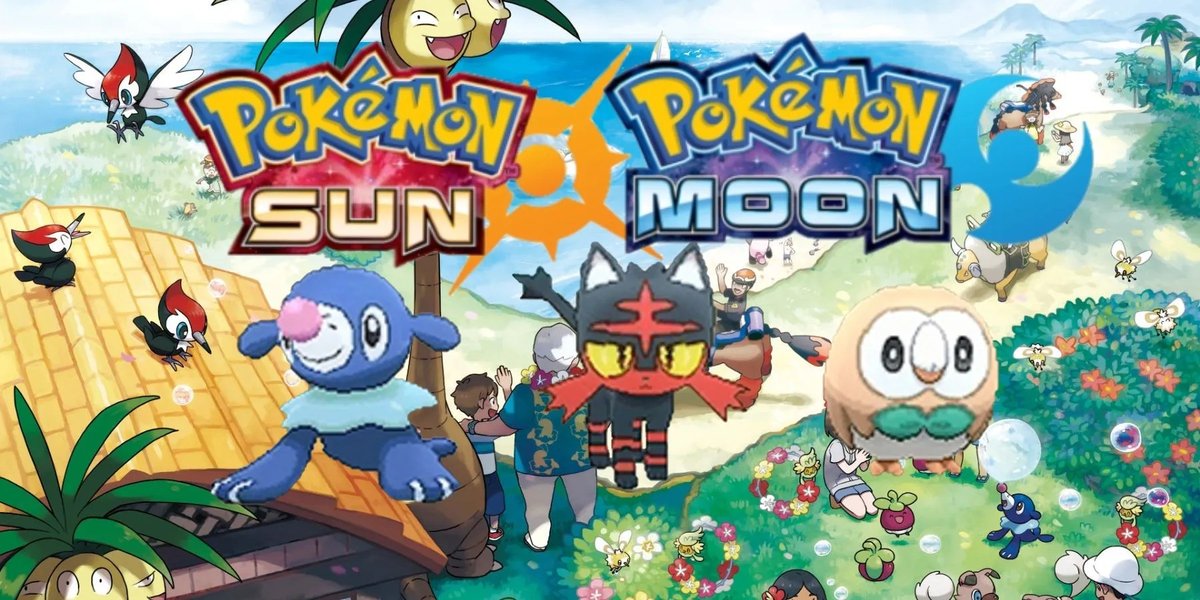
Stepping into the vibrant worlds of Alola and Galar, Pokémon fans experienced some of the franchise's most inventive creature designs and compelling regional narratives. These two generations, Generation 7 & 8: Alola & Galar Pokémon Totals, didn't just expand the Pokédex; they redefined how we think about Pokémon adaptation, environmental storytelling, and the sheer joy of discovery. If you've ever wondered about the distinct flavors these regions added to the Pokémon universe, you're in for a treat.
At a Glance: Generation 7 & 8 Pokémon Totals
- Generation VII (Alola): Introduced a grand total of 88 new Pokémon species, expanding the National Pokédex from 721 to 809.
- Key Games: Pokémon Sun, Moon, Ultra Sun, Ultra Moon (Nintendo 3DS), Pokémon Go (with updates), Pokémon: Let's Go, Pikachu! and Let's Go, Eevee! (Nintendo Switch).
- Major Innovation: Introduced Alolan Forms—regional variants of existing Pokémon—and powerful Z-Moves.
- Generation VIII (Galar): While this guide focuses primarily on the detailed context provided for Alola, Generation VIII, set in the Galar region, continued this tradition by introducing its own roster of brand-new Pokémon, each reflecting the unique characteristics and culture of its new home.
- What You'll Find Here: A deep dive into every new species and significant form from Generation VII, detailing their origins, abilities, and impact on the Pokémon world.
Generation VII: Diving Deep into Alola
The seventh generation of Pokémon whisked us away to the Alola region, a chain of tropical islands brimming with unique ecosystems and cultural nuances. Launched with Pokémon Sun and Moon in 2016 on the Nintendo 3DS, and expanded upon by Ultra Sun and Ultra Moon in 2017, this generation was a breath of fresh, sea-scented air. It even dipped back into the Kanto region with Pokémon: Let's Go, Pikachu! and Let's Go, Eevee! on the Nintendo Switch in 2018, tying in new species there too.
Under the guidance of design titans Ken Sugimori and Hironobu Yoshida, a team of roughly 20 artists crafted the 88 species that would come to define this vibrant era. For those interested in exploring the Alola region, its tropical islands offer a rich tapestry of challenges and discoveries.
The Alola Roster: A Species Breakdown
Generation VII meticulously rolled out its new Pokémon across different game releases, culminating in a total of 88 distinct species added to the National Pokédex, starting from number 722.
- Initial Wave (2016): The launch of Sun and Moon brought the bulk of Alola's new residents, introducing Pokémon numbered 722 (Rowlet) to 802 (Marshadow). These were the core cast that defined the region's initial charm.
- Ultra Additions (2017): Ultra Sun and Ultra Moon followed up with five additional species, 803 (Poipole) to 807 (Zeraora), deepening the lore and expanding the available roster.
- Late Arrivals (2018): Two additional Mythical Pokémon, Meltan and Melmetal, made a unique debut. First appearing in Pokémon Go, Meltan could be transferred to Let's Go, Pikachu! or Let's Go, Eevee!. Melmetal, its powerful evolution, required 400 candies in Pokémon Go, showcasing an innovative crossover mechanic.
Alolan Forms: Old Friends, New Looks
One of Generation VII's most beloved innovations was the introduction of "Alolan Forms." These weren't new species entirely, but rather existing Generation I Pokémon that had adapted to Alola's distinct microclimates. This often resulted in striking changes to their appearance, typing, and abilities, breathing new life into classic favorites. Imagine understanding Alolan Forms as a glimpse into convergent evolution within the Pokémon world.
Let's look at some notable examples:
- Rattata & Raticate: Adapted to urban Alola, they became Dark/Normal-types, with black fur and a high-calorie diet. Alolan Raticate even served as a Totem Pokémon.
- Raichu: A Psychic/Electric-type, Alolan Raichu glides on its tail like a surfboard, possibly influenced by eating fluffy Alolan pancakes!
- Sandshrew & Sandslash: These Kanto ground-types transformed into Ice/Steel-types in Alola's snowy mountains. Alolan Sandslash even grows ice pick-like claws for climbing.
- Vulpix & Ninetales: Similarly, these Fire-types adapted to the cold, becoming elegant Ice/Fairy-types. Alolan Ninetales is known for its kindness to lost travelers, despite its general dislike of people.
- Diglett & Dugtrio: Sporting golden whiskers, these Ground/Steel-types use their "Pele's Hair"-like whiskers to sense their digging direction. Alolan Dugtrio's whiskers are said to bring bad luck if plucked.
- Meowth & Persian: Originally bred by Alolan royalty, these Dark-types are known for their prideful and selfish demeanor, even after going feral.
- Geodude, Graveler, & Golem: These Rock/Electric-types are covered in magnetic rocks. Alolan Golem even sports a taser-like cannon, launching electrified rocks.
- Grimer & Muk: Reflecting Alola's concern for waste, these Poison/Dark-types consume wastewater, their bodies displaying vibrant, oil-spill-like colors. Muk's diet leads to chemical reactions and crystallized toxins.
- Exeggutor: This Grass/Dragon-type represents Exeggutor's "true original form," towering at 35 feet tall due with an additional head on its tail for rear attacks.
- Marowak: As a Ghost/Fire-type, Alolan Marowak ignites its bone with its deceased mother's soul, performing a mystical dance. It also serves as a Totem Pokémon.
Guardians, Beasts, and Mythicals: The Legendary Lineup
Alola introduced an incredible array of powerful and enigmatic Pokémon, each with deep ties to the region's lore and an impact on the overall distinguishing Legendary from Mythical Pokémon landscape.
- Type: Null & Silvally: Created by the Aether Foundation to combat Ultra Beasts, Type: Null is a man-made chimeric Legendary. Its evolution, Silvally, can change between all 18 types using memory disks with its "RKS System"—a direct nod to Arceus's Multitype ability.
- Minior: This Rock/Flying-type lives in the ozone layer, falling to Earth when its heavy shell makes it descend. It changes forms based on its HP and "dies" if not in a Poké Ball after its shell breaks.
- Komala: A Normal-type koala that is born and dies asleep, perpetually in a drowsy state due to sedative leaves.
- Togedemaru: An Electric/Steel-type rodent that attracts and directs lightning to itself, serving as a Totem Pokémon.
- Mimikyu: A Ghost/Fairy-type, Mimikyu hides under a tattered Pikachu-like rag, crying if its disguise is ruined. Its ability, Disguise, protects it from the first attack. It's also a Totem Pokémon.
- Drampa: A Normal/Dragon-type, kind to children, but infamous for burning down the houses of bullies.
- Dhelmise: A Ghost/Grass-type, formed from seaweed and ship debris, wielding a powerful anchor swing.
- Kommo-o Line (Jangmo-o, Hakamo-o, Kommo-o): These Dragon/Fighting-types are known for their metallic scales. Kommo-o, the final evolution, clatters its tail scales in battle and is a Totem Pokémon.
- Tapu Guardians: These four Fairy-types are the patron deities of Alola's four main islands:
- Tapu Koko (Electric/Fairy): Guardian of Melemele Island, known for summoning thunderclouds.
- Tapu Lele (Psychic/Fairy): Guardian of Akala Island, sprinkles healing scales that are also dangerous.
- Tapu Bulu (Grass/Fairy): Guardian of Ula'ula Island, the kindest of the Tapus, grows and controls vegetation.
- Tapu Fini (Water/Fairy): Guardian of Poni Island, creates dense fogs said to act as a bridge to the afterlife.
- Cosmog, Cosmoem, Solgaleo, & Lunala: The Cosmog line plays a central role in Alola's story.
- Cosmog: A pure Psychic-type, small and ethereal.
- Cosmoem: Evolves from Cosmog, a cosmic chrysalis.
- Solgaleo (Psychic/Steel): The mascot of Sun and Ultra Sun, known as the "beast that devours the sun." Can fuse with Necrozma.
- Lunala (Psychic/Ghost): The mascot of Moon and Ultra Moon, known as the "beast that calls the moon." Can fuse with Necrozma.
- Ultra Beasts (UBs): These alien creatures from Ultra Wormholes are designated with codes, emphasizing their otherworldly nature.
- Nihilego (UB-01 Symbiont): A Rock/Poison parasite that appears glass-like; its neurotoxin makes infested hosts violent.
- Buzzwole (UB-02 Absorption): A Bug/Fighting type that flexes, sucking life to strengthen its muscles.
- Pheromosa (UB-02 Beauty): A Bug/Fighting type, extremely fast and feminine, emitting pheromones that cause infatuation.
- Xurkitree (UB-03 Lighting): An Electric type resembling wires and trees, capable of draining electricity with powerful shocks.
- Celesteela (UB-04 Blaster): A Steel/Flying rocket-like Pokémon that expels gas for flight and absorbs plant nutrients for fuel.
- Kartana (UB-04 Blade): A Grass/Steel type, origami-like, with impossibly sharp edges capable of cutting steel towers.
- Guzzlord (UB-05 Glutton): A Dark/Dragon type that eats anything without producing droppings, converting all consumed matter into energy.
- Poipole (UB Adhesive): A Poison type, a common sight in its home world, capable of spraying adhesive poison.
- Naganadel (UB Stinger): The evolution of Poipole, a Poison/Dragon type storing liters of poisonous liquid, with its brain connected to its needles.
- Stakataka (UB Assembly): A Rock/Steel type exclusive to Ultra Moon, resembling a wall made of ~150 lifeforms.
- Blacephalon (UB Burst): A Fire/Ghost type exclusive to Ultra Sun, clown-like, with an exploding head that absorbs vitality; its signature move is Mind Blown.
- Necrozma (UB: Black): A Psychic type, an ancient creature associated with UBs that utilizes prisms and light refraction. It plays a major role in Ultra Sun and Ultra Moon, possessing Solgaleo (Dusk Mane Necrozma) or Lunala (Dawn Wings Necrozma) to absorb light. Its Ultra Necrozma form boasts a body temperature exceeding 10,000°F.
- Magearna: A Steel/Fairy Mythical Pokémon, man-made 500 years ago, containing a "Soul-Heart."
- Marshadow: A Fighting/Ghost Mythical Pokémon that hides in shadows and can read feelings.
- Zeraora: A pure Electric Mythical Pokémon whose signature move, Plasma Fists, changes Normal-type moves to Electric.
Memorable Moments: Key Pokémon from Alola
Beyond the Legendaries, many everyday and unique Pokémon helped define Generation VII, each bringing a fresh mechanic or personality to the forefront.
- The Beloved Starters:
- Rowlet (Grass/Flying): An owl-like Pokémon known for silent attacks (41% poll vote). Evolves into Dartrix and then the archer-like Decidueye (Grass/Ghost), playable in Pokkén Tournament DX.
- Litten (Fire): A kitten-like Pokémon that spits flaming hairballs (38% poll vote). Evolves into Torracat and then the formidable Incineroar (Fire/Dark), a heel fighter playable in Super Smash Bros. Ultimate.
- Popplio (Water): A sea lion Pokémon that forms water bubbles from its snot. Evolves into Brionne and then the mermaid/siren-like Primarina (Water/Fairy), known for its powerful singing voice.
- Early Route & Common Encounters:
- Pikipek, Trumbeak, Toucannon: A woodpecker line, with Toucannon (Normal/Flying) capable of superheating its beak, considered a good luck charm.
- Yungoos & Gumshoos: Normal-types, Yungoos is an invasive, voracious eater combating Alolan Rattata. Gumshoos, resembling a detective, is a patient hunter and a Totem Pokémon.
- Grubbin, Charjabug, Vikavolt: An Electric-type line. Grubbin has powerful jaws, Charjabug stores electricity (based on a 9-volt battery), and Vikavolt zaps enemies, serving as a Totem Pokémon.
- Crabrawler & Crabominable: Fighting-types. Crabrawler's boxing glove pincers are found in berry piles. Crabominable (Fighting/Ice) trains in snowy conditions and smashes walls.
- Oricorio: A Flying-type with four "Style" forms (Pom-Pom, Pa'u, Baile, Sensu) based on different dance types and islands, each with a different secondary type (Electric, Psychic, Fire, Ghost).
- Strategic Surprises & Unique Mechanics:
- Rockruff & Lycanroc: Rockruff evolves into different Lycanroc forms based on the game and time of day: Midday Form (wolf-like) in Sun, Midnight Form (werewolf-like) in Moon, and Dusk Form (only from Own Tempo Rockruff) in Ultra Sun/Ultra Moon.
- Wishiwashi: A pure Water-type whose Solo Form has the lowest base stats, but its Schooling ability transforms it into a powerful school. It’s also a Totem Pokémon.
- Salandit & Salazzle: Poison/Fire-types. Only female Salandit evolve into Salazzle, which emits pheromones to control males and is a Totem Pokémon.
- Bewear: A Normal/Fighting-type that is friendly but delivers dangerously strong hugs capable of shattering bones.
- Mimikyu: (Already covered as Legendary/Mythical) Its Disguise ability and poignant backstory made it an instant fan favorite.
- Pyukumuku: A pure Water-type known for ejecting its internal organs. Competitions exist to chuck them back into the sea.
- Tsareena: A Grass-type, the final evolution of Bounsweet, known for its vicious temper and powerful kicks.
- Special Mentions:
- Comfey (Fairy): Adorns itself with flowers.
- Oranguru (Normal/Psychic): Extreme intelligence, operates Poké Balls, often found in trees.
- Passimian (Fighting): Uses hardened berries as weapons.
- Wimpod & Golisopod: Wimpod is cowardly and leaves a clean path. Golisopod (Bug/Water) lives in sunken ships.
- Sandygast & Palossand: Ghost/Ground-types. Sandygast takes control of those who put a hand in its mouth, while Palossand, a sandcastle, hypnotizes and swallows people.
- Morelull & Shiinotic: Grass/Fairy-types that lull opponents to sleep and emit flickering spores.
- Mudbray & Mudsdale: Ground-types. Mudbray pulls 50 times its weight, and Mudsdale (a Ride Pokémon) can carry 10 tons.
- Dewpider & Araquanid: Water/Bug-types. Dewpider cannot breathe air without carrying a water bubble. Araquanid traps smaller Pokémon in bubbles and is a Totem Pokémon.
- Fomantis & Lurantis: Grass-types. Fomantis sleeps during the day. Lurantis, a flower resembling an insect, fires beams and is a Totem Pokémon.
Generation VIII: A Glimpse into Galar
As noted, the provided context research focuses exclusively on Generation VII. However, the Pokémon journey didn't stop in Alola. Generation VIII, introduced with Pokémon Sword and Shield in 2019, transported trainers to the vast, industrially influenced Galar region. This generation brought its own set of exciting new Pokémon, contributing significantly to the overall count, and continuing the tradition of regional forms and unique mechanics. While we don't have the granular details for Galar in this particular deep dive, it's crucial to acknowledge its role in further expanding the Pokémon universe and adding to the grand total of species across the generations.
Understanding the Pokémon Count Evolution
Each new generation of Pokémon builds upon the last, adding unique species and evolving gameplay mechanics that keep the franchise fresh and engaging. From the original 151 in Kanto to the tropical diversity of Alola and beyond, the National Pokédex grows with every new adventure. If you're curious about the full scope of this expansion, exploring how many Pokémon per generation truly highlights the incredible journey of creature design and world-building. These additions don't just increase a number; they offer new strategies, new stories, and new companions for trainers worldwide. Every new Pokémon, whether a common route encounter or a powerful Legendary, contributes to the rich tapestry of the Pokémon world, challenging trainers to master mastering Pokémon type matchups with each new creature they encounter.
Navigating New Regions and Forms: Key Takeaways
Generation VII, with its Alolan region, stands out as a pivotal moment in Pokémon history. It wasn't just about adding 88 new species; it was about reimagining existing ones through Alolan Forms, introducing complex narratives with Ultra Beasts and the Necrozma saga, and empowering trainers with mechanics like Z-Moves. The rich lore, diverse ecosystems, and memorable characters made Alola a truly unforgettable destination.
As you reflect on the sheer volume and creativity packed into Generation VII, remember that each Pokémon, from the tiniest Cutiefly to the colossal Guzzlord, contributes to the vibrant, evolving world we all love. These creatures aren't just data points; they're companions, challenges, and enduring symbols of discovery. The journey through Alola highlights how Pokémon continues to innovate, ensuring that there's always something new to learn and explore, making every new generation feel like a fresh adventure.
Note to Editor: The provided "CONTEXT RESEARCH" for this article was exclusively focused on Generation VII (Alola). Consequently, detailed information, specific Pokémon counts, and characteristics for Generation VIII (Galar) could not be included, as per the instruction to "rely on ground truth." The Galar section has been kept brief to acknowledge its existence and contribution to the overall total mentioned in the prompt's title, without inventing any details.